We have written before about the Senate's growing pile of online-gambling ban bills — a stack of proposals gaining momentum on a wave of dirty-money fears and addiction headlines, without one obvious front-runner. That has changed. One bill has moved to the head of the queue, and it is worth reading on its own terms, separate from the politics swirling around it. Senate Bill No. 47, the Anti-Online Gambling Act, authored by Majority Leader Joel Villanueva, now sits among the chamber's top-ten priority measures. Priority status is not passage, but it is the difference between a bill that exists and a bill that is meant to move.
This is an analysis of the instrument, not a prediction of its fate. What does SB 47 actually do, what does it punish, and where are its hardest edges?
What the bill prohibits
SB 47's prohibition is written broadly. It reaches the placing, receiving, or transmitting of bets or wagers over the internet — capturing not just the bettor but the operator and the intermediaries that carry the wager. That breadth is deliberate: a ban that only named the bettor would be unenforceable and unfair, so the bill spreads liability across the chain that makes an online bet possible.
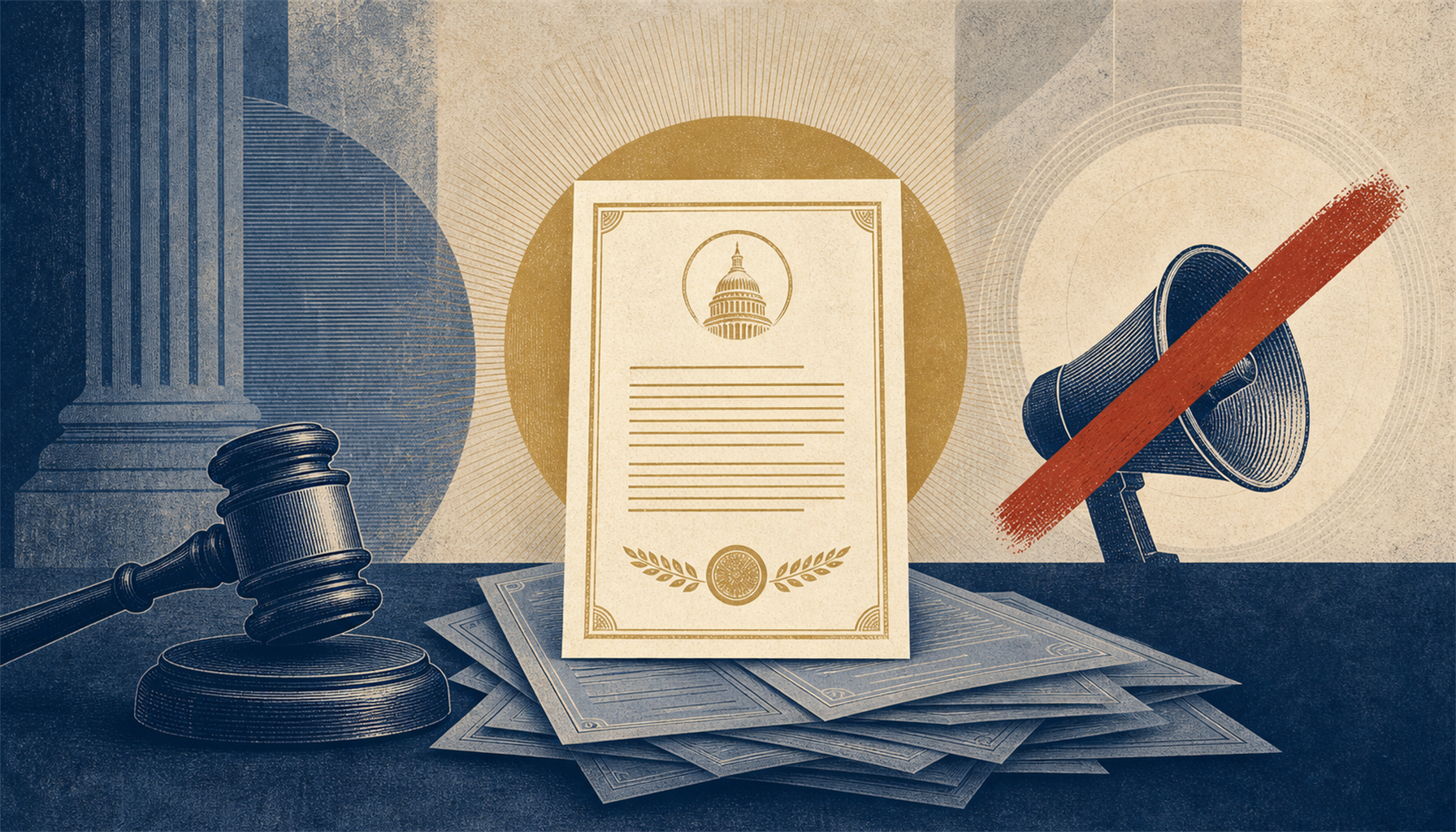
The feature that gives SB 47 its real teeth, though, is the one that goes beyond the bet itself: it bans the advertising and promotion of online gambling. This is the same layer the executive branch is already attacking through enforcement — the influencers, celebrity pages, and affiliate promoters who feed platforms their audiences. The difference is that current enforcement reaches only the promotion of unlicensed sites. SB 47 would criminalise promotion of online gambling as a category. That single clause is what converts the bill from a gambling ban into something closer to a speech-and-commerce ban around an entire industry.
A ban on the bet is a gambling law. A ban on the advertising of the bet is something closer to a speech-and-commerce law around an entire industry.
On SB 47's most consequential clauseThe penalty architecture
SB 47 grades its penalties, which is where its theory of deterrence shows. An individual faces imprisonment of one to six months or a fine of PHP 100,000 to PHP 500,000 — meaningful, but calibrated for participants rather than kingpins. The weight falls on the corporate and official tier: corporations face fines up to PHP 500,000, and the responsible officer of a corporation involved in online gambling faces up to five years' imprisonment. Public officials and employees drawn into the trade face heightened exposure as well.
The escalation is the point. By reserving the five-year sentence for the officer who runs the operation, the bill aims liability at the people with the most control and the most to lose, while keeping individual-participant penalties comparatively modest. It is a structure designed to make operating an online gambling business — or steering a company into one — the genuinely dangerous act, rather than treating every bettor as the primary offender.
Mechanics and the companion bill
On process, the bill is conventional: within 30 days of enactment, implementing rules would be issued by the Department of the Interior and Local Government together with the Department of Justice, and the law would take effect 15 days after publication. The DILG-DOJ pairing signals that enforcement is envisioned as a combined local-government-and-prosecution effort rather than something routed through the gaming regulator — a notable choice, given that it would partly write PAGCOR out of the supervisory role it holds over the licensed market today.
SB 47 is not travelling alone. Senator Loren Legarda has filed a companion measure that likewise reaches the publishing, advertising, endorsing, and promoting of gambling content online, and Senator Bong Go has publicly pressed for a total ban. The convergence of a prioritised lead bill, a companion bill hitting the same advertising-and-endorsement layer, and vocal champions is what distinguishes this moment from the earlier, more diffuse momentum. The advertising ban is no longer one idea among many; it is the shared core of the leading proposals.
The hardest edge: licensed and unlicensed in one net
The central tension in SB 47 is scope. The executive branch's enforcement campaign is built on a distinction — licensed operators are regulated, unlicensed offshore operators are hunted. A total online ban collapses that distinction by design. As drafted, the bill targets online gambling as such, which means it would remove the licensed online channel along with the illegal one. That is the deliberate choice of the ban camp, which argues the licensed market has not contained the harms and should not survive. But it carries a well-rehearsed risk this publication has noted repeatedly: removing the legal channel does not remove the demand, and a banned legal market can push players toward exactly the offshore and crypto-funded operators the state has the least power to reach. The regulator, meanwhile, is staring at a revenue forecast already cut by up to 19%; a total ban would convert that managed decline into the deliberate end of a licensed industry and its tax base.
None of this decides whether the bill is right. It clarifies the stakes. SB 47 is a serious, well-structured instrument that does precisely what its authors intend — and what it intends is far more sweeping than the targeted enforcement now underway.
The bottom line
Senate Bill 47 is the ban debate's lead vehicle: a top-ten-priority Anti-Online Gambling Act that would prohibit online betting end to end, criminalise its advertising and promotion, and reserve up to five years in prison for the officers who run the operations. Its advertising ban aligns the legislature with the executive's crackdown on promoters, while going further by reaching licensed operators too. With a Legarda companion bill and powerful backers behind it, the proposal is no longer one of many — it is the one to watch. Whether it becomes law is unsettled; what it would do if it did is not. It would not merely shrink the online market. It would close it.
Frequently Asked Questions
Sources
- Digital Policy Alert, "Philippines: Anti-Online Gambling Act (Bill No. 47) was introduced to Senate"
- iGaming Business, "Philippine senator introduces bill to ban all online gambling"
- iGaming Future, "Amid Dirty Money Fears, Philippines Revives iGaming Ban Bill"
- Philippine News Agency, "Senators press for united action vs. online gambling 'crisis'"
- Office of Senator Bong Go, "The time is now to ban online gambling"
- PH Gaming Intel, "The Ban Bills Reach the Boil Just as the World Cup Kicks Off" and "From Blocking Sites to Charging People"