Section
Regulation
PAGCOR rulemaking, Senate bills, license frameworks, and AML compliance across PH gaming.
31 articles

The Messi Effect on the Bet Slip: How a Legend's Last Dance Becomes Marketing's Sharpest Hook — and What the Philippines Is Trying to Blunt
Lionel Messi tying the all-time World Cup goals record 20 years after his debut is the kind of narrative no marketing department could invent and every one will borrow. A legend chasing history is the most powerful emotional hook in sports betting — it converts admiration into action and turns watching into wagering. That is exactly the lever the Philippines is moving to restrict, through PAGCOR's escalating advertising crackdown and Senate Bill 47's outright ban on gambling promotion. This analysis connects the psychology of the star narrative to the regulatory response now colliding with the World Cup's peak marketing window, and asks what a country gains, and gives up, by trying to legislate against a feeling.
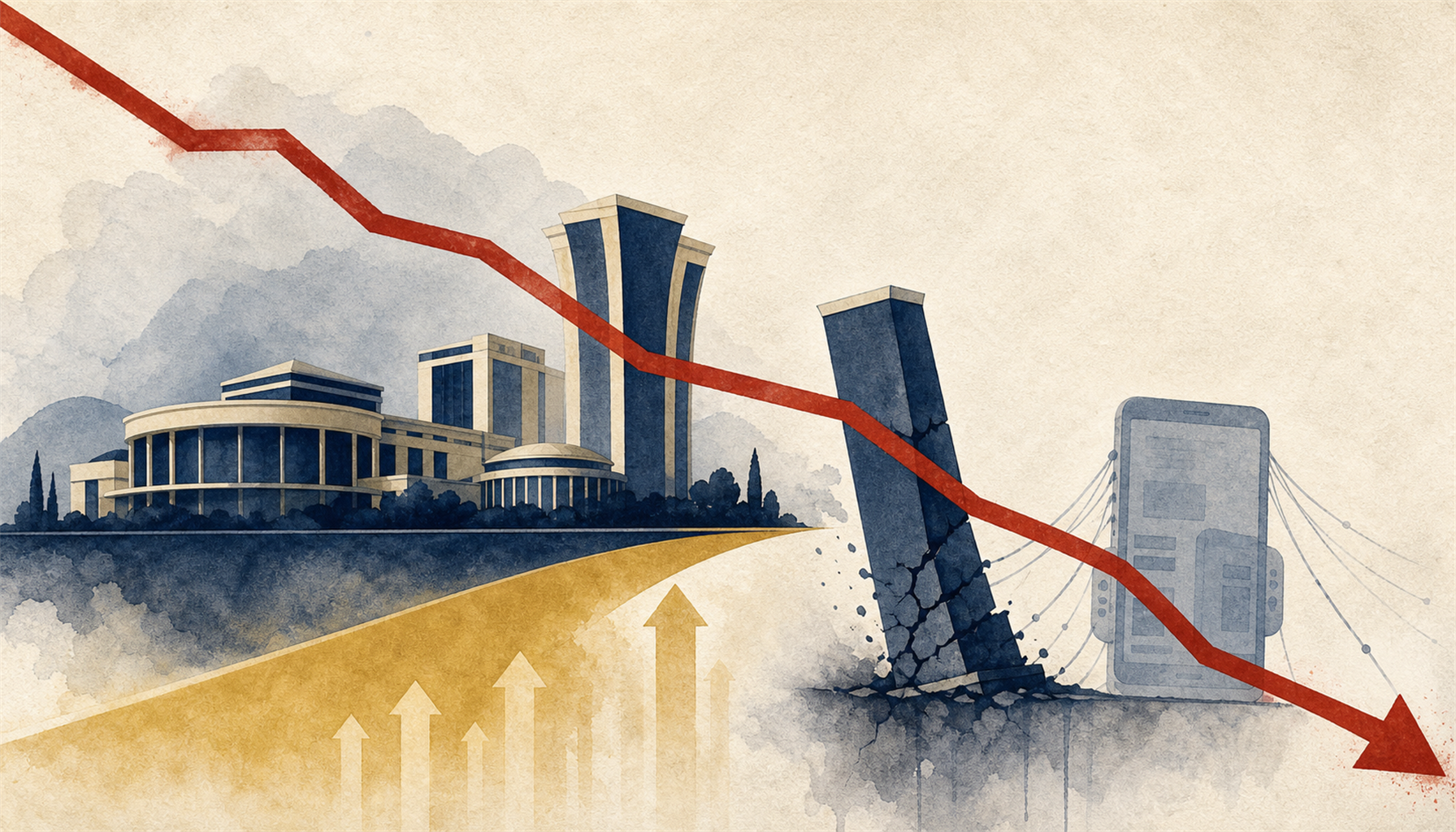
PAGCOR Cuts Its 2026 Revenue Forecast: Why the Regulator Now Expects GGR to Fall as Much as 19%
In early June 2026, PAGCOR chairman Alejandro Tengco told reporters the Philippine gaming industry could see gross gaming revenue fall by as much as 19% this year — to between PHP 320 billion and PHP 350 billion, down from PHP 396.14 billion in 2025. It is a striking reversal: only four months earlier the regulator had projected roughly flat revenue. The downgrade is driven by the online segment, where the e-wallet delinking order has cut deeply, and compounded by cost pressures the chair tied to Middle East tensions. This piece unpacks what changed, which segment is doing the damage, and why a falling top line is, in part, exactly what the tightening was designed to produce.

From Blocking Sites to Charging People: The Philippines Turns Its Gambling Crackdown on Promoters and Influencers
For two years the Philippine enforcement effort against illegal online gambling was mostly about infrastructure — blocking sites, seizing hardware, delinking payments. In 2026 it changed targets. The Cybercrime Investigation and Coordinating Center, working with PAGCOR and the advocacy group Digital Pinoys, moved to file criminal charges against social-media influencers who promote illegal betting platforms, naming figures including Jam Magno. The CICC also formalised a case-buildup partnership with the Presidential Anti-Organized Crime Commission, Meta began removing celebrity pages, and police relieved officials over neglected raids. As the World Cup drives the year's biggest promo surge, here is what shifting from sites to people actually means — and where it could overreach.

Senate Bill 47 in Detail: The Anti-Online Gambling Act That Would Jail Operators and Outlaw the Ads
We have tracked the pile-up of online-gambling ban bills in the Philippine Senate. One has now moved to the front: Senate Bill No. 47, the Anti-Online Gambling Act, authored by Majority Leader Joel Villanueva and listed among the chamber's top-ten priority measures. This piece reads the bill itself — not the politics around it. It would prohibit placing, receiving, or transmitting bets online, and crucially, it would ban the advertising and promotion of online gambling outright. It carries graduated penalties: jail or fines for individuals, and up to five years' imprisonment for a corporation's responsible officer. With a companion total-ban bill from Senator Loren Legarda alongside it, here is what SB 47 actually does and where its hardest edges are.

'Fully Eradicated' Meets the World Cup: The POGO Ban's Claim of Victory Faces Its Hardest Demand Test
In April 2026, the Philippine Department of Justice declared the offshore gaming industry fully eradicated — no official POGOs, and, it said, no illegal ones either. The government also adopted standard operating procedures to lock the ban in place and keep the operators from coming back. But enforcement officials have repeatedly acknowledged that some operations persist underground, and the World Cup now supplies the one thing residual offshore infrastructure most responds to: a surge of betting demand. This piece weighs the eradication claim against the enforcement reality, explains what the new lock-in rules actually do, and asks what a peak-demand tournament reveals about whether 'eradicated' means gone or means driven out of sight.

Betting on Impunity: How the Gaps Between National Rulebooks Become the World Cup's Real Risk
A 2026 Global Initiative analysis argues that the biggest betting event in history will heighten risk not because any single market is lax, but because the seams between national rulebooks create impunity. What one country bans, another licenses; what one regulator monitors, another cannot see. The report puts prediction markets — fast-growing, often unlicensed, frequently crypto-settled — at the centre of the problem, and points to FIFA's own roughly $150-million deal with a Gibraltar-licensed prediction-market platform as a sign of how fast the frontier is moving. This analysis reads the regulatory-arbitrage thesis through a Philippine lens: what it means for a country that can only police its own perimeter.

Deposit, Layer, Cash Out: The UN's Three-Stage Map of How Betting Launders Money — and Why the World Cup Helps
A 2026 United Nations report lays out, in unusually plain terms, how online gambling platforms are used to wash criminal proceeds: money is deposited as bets, obscured through in-game transfers and proxy wagering, then withdrawn as 'winnings' that look clean. The same report names the Philippines among the jurisdictions increasingly connected to the white-label gambling networks that power Southeast Asia's scam-compound economy. This analysis works through the three-stage model, why a $50-billion betting tournament is a gift to the layering stage, and where the licensed Philippine market sits relative to the offshore machine the UN is describing.

The Grey List Risk Behind the World Cup Betting Surge: Why Online Gambling Could Cost the Philippines More Than Money
The Philippines spent nearly four years climbing off the Financial Action Task Force's money-laundering grey list, finally exiting in February 2025. Months later, the central bank governor was asked directly whether unregulated online gambling could send the country back — and his answer was one word: yes. With the World Cup driving the year's biggest surge in betting, much of it through offshore and crypto channels the monitoring system cannot see, this analysis works through why the grey-list risk is the highest-stakes cost of the offshore market, why the next FATF evaluation in 2027 makes the timing fragile, and why the licensed perimeter is the part of the market regulators can actually account for.

The Ban Bills Reach the Boil Just as the World Cup Kicks Off
The Philippine Senate's push to ban online gambling has moved from background threat to active pressure exactly as the World Cup arrives. Deliberations on the Anti-Online Gambling Act have resumed, an outright-ban bill and an e-wallet-ban bill sit alongside it, and the revived fear of returning to the FATF money-laundering grey list has handed the prohibition camp its most powerful argument yet. This analysis maps the bills now in play, why the tournament's peak-betting window is also peak political ammunition, and how the total-ban camp and the regulate-and-formalize camp are reading the same surge to opposite conclusions.

The World Cup Meets the Ad Crackdown: PAGCOR Weighs a Total Gambling Ad Ban at the Worst Possible Moment for Operators
A World Cup is when gambling advertising peaks — and it is arriving in the Philippines just as PAGCOR tightens the screws on gambling ads. Billboards have been ordered down nationwide, a memorandum with the Ad Standards Council now governs what operators may say, and the regulator has openly floated extending the existing primetime broadcast ban to all hours. Chairman Tengco still insists regulation, not prohibition, is the answer. This is what is actually restricted, what is still under debate, and why the timing collides head-on with football's biggest sales window.

Friction by Design: How the Philippines' Payment Crackdown Meets Peak World Cup Demand
The Philippines has spent a year building deliberate friction into how money reaches a betting account — an August 2025 order severing GCash and Maya from gaming platforms that cut online transactions roughly in half, followed by an outright ban on credit-card and cryptocurrency funding. Friction is the policy, not a bug. But the World Cup is the year's biggest surge in betting demand, and this analysis works through the tension at the center of the design: whether payment friction protects players, pushes some toward offshore crypto sites that accept exactly the banned methods, or does both at once.

The World Cup Will Be the Biggest Test Yet of Whether Betting Apps Can Keep Minors Out
A new Jumio study of 8,003 adults finds 63 percent worry that minors will use sports betting apps during the World Cup, and 74 percent say the responsibility for stopping them sits with the platforms and their technology providers — not parents. With betting volume set to surge across a 39-day tournament, the 2026 World Cup becomes a real-world stress test of digital age and identity verification at scale. Here is what that means, where PAGCOR's KYC regime fits, and why the Philippines should watch closely.

The Referee Stops Playing: PAGCOR's Decoupling Plan Awaits the Governance Commission's Green Light
PAGCOR is moving to split the two jobs it has held since 1976 — regulating the gambling industry and running its own Casino Filipino chain. The administrative route now runs through the Governance Commission for GOCCs, whose recommendation Chairman Alejandro Tengco expects within weeks before the proposal goes to the Office of the President. A privatized Casino Filipino could raise PHP 30 to 50 billion. This is what the decoupling actually changes, how it differs from the Senate's separate legislative push, and what it means for a market already being reshaped by the minimum guaranteed fee and the cashback cap.

PAGCOR Has Blocked 12,562 Illegal Gambling Sites — and Is Betting the Friction Itself Deters Players
PAGCOR says 93.8 percent of the 13,399 illegal gambling sites it has flagged to partner agencies are now blocked, up from 74 percent just two months earlier, with an AI-powered detection tool driving the jump. The agency is explicit about the strategy: it cannot kill every illicit site, so it is banking on the repeated friction of blocking to deter casual bettors and push them toward licensed operators. With World Cup search traffic spiking, this is what the numbers mean, why blocking is whack-a-mole by design, and how Filipino players can tell a licensed site from a trap.

PAGCOR's Minimum Guaranteed Fee Takes Effect June 1 — and a New Cap on Player Rebates Comes With It
After a two-month deferral, PAGCOR's Minimum Guaranteed Fee regime for licensed online gaming began its first tranche on June 1, 2026, running through December 31. Arriving alongside it is a May 7 memorandum capping player rebate and cashback programs at 1.5 percent of turnover — or 15 percent of net losses — and barring operators from deducting those promotions from gross gaming revenue. Together the measures reset the cost floor and the marketing ceiling for every PAGCOR-licensed online operator.

Why PAGCOR's Cashback Cap Tilts the Table Toward the Giants
PAGCOR's new 1.5 percent cap on player rebates was announced as a measure to level the online gaming playing field, and DigiPlus — the operator that controls roughly half the licensed market — publicly welcomed it. That endorsement is the tell. This analysis works through why a cap on cashback, paired with the minimum guaranteed fee that took effect June 1, removes the main competitive lever sub-scale operators had against a dominant incumbent, and why the predictable result is faster market consolidation rather than a fairer fight.

DigiPlus Leads Launch of PlaySafe Alliance as PAGCOR Doubles Down on Responsible Gaming
DigiPlus has joined with other PAGCOR-licensed online operators to launch the PlaySafe Alliance of the Philippines, an industry responsible-gaming body that arrives the same week PAGCOR Chairman Alejandro Tengco told SiGMA Asia in Pasay City that regulators and operators must strengthen player safeguards amid softer market conditions. The alliance is a genuine consumer-protection build-out — and, read against the Senate's live total-ban debate, an unmistakable reputational defense by an industry arguing it can regulate itself rather than be banned.

The Bill That Could Replace the Patchwork: Inside the Philippines' New Comprehensive iGaming Framework
The Senate and PAGCOR are jointly drafting a single comprehensive law to govern the Philippine online gaming sector — replacing the current memorandum-by-memorandum patchwork with a unified framework covering payment-channel controls, marketing restrictions, and consumer protection. DigiPlus sits on the technical working group. This analysis maps what a comprehensive iGaming law would change, why the licensed industry wants the certainty it offers, and why it is being drafted in direct tension with the Senate camp that would rather ban online gambling outright.

Inside CEZA and Aurora: The Philippine Economic Zones That Defined a Gaming Era — and the One That Refused to Host POGOs
The Cagayan Economic Zone Authority and the Aurora Pacific Economic Zone and Freeport Authority were the two Philippine special economic zones that held independent gaming-licensing authority under the country's freeport framework. CEZA's position — that it never licensed POGOs, only its own iGaming framework under Republic Act 7922 — and Aurora's separate trajectory tell a quietly important parallel history of Philippine gaming policy that sits underneath the better-known PAGCOR narrative.

Senate Anti-Online Gambling Act Hearing Reopens as Tulfo Pushes Total Ban and Meta No-Shows
The Philippine Senate's Committee on Games and Amusement reopened public hearings on February 11, 2026 to debate seven Senate bills filed under the Anti-Online Gambling Act umbrella, with chair Senator Erwin Tulfo publicly committing to a total ban posture. Meta's no-show triggered a show-cause order. The committee's deliberations now shape the regulatory horizon for the entire Philippine licensed online gambling sector.

PAGCOR Cuts Live Sports Betting GGR Share Rate from 17.5% to 15%: Why the Math Changed
PAGCOR's January 26, 2026 revision of the live sports betting gross gaming revenue share rate — from 17.5 percent to 15 percent, with the 30 percent virtual betting rate maintained — was the regulator's first substantive accommodation to the licensed online gambling sector since the August 2025 BSP delinking order. An analytic read of what the 2.5-point cut signals about PAGCOR's strategic posture, what it means for ArenaPlus and competing PIGO sportsbooks, and where the next regulatory adjustment is most likely to come.

After the Bell: The Resurgent Underground of Philippine Cash Gambling
When the BSP ordered Philippine e-wallets to remove gambling links in August 2025, the licensed sector lost a quarter of its transactional baseline overnight. Where the displaced activity went — and where it always was — is the story of the country's parallel cash-gambling economy, the sari-sari store infrastructure that feeds it, the e-sabong shadow that never fully closed, and the Atong Ang case that anchors the political-economy backdrop.

The E-Wallet Delinking Order, Six Months On: What the August 2025 BSP Directive Did to Philippine Online Gaming
An analytic read of the structural impact of the August 14, 2025 BSP directive requiring e-wallets to remove in-app links to online gambling platforms. The order produced a 50 percent immediate transaction decline, a 49 percent drop in PAGCOR online gaming income through Q4 2025, a 25 percent DigiPlus revenue decline in Q1 2026, and a 39 percent EBITDA decline at Bloomberry for full-year 2025. What changed, what didn't, and what the new equilibrium looks like.

PAGCOR Sets August 1 Deadline to Decommission Non-Compliant B2B Gaming Systems
A May 21 memorandum from PAGCOR's Electronic Gaming Licensing Department gives every B2B supplier in the Philippine online gaming sector until July 31 to clear a fresh accreditation, or face decommissioning of their platforms and equipment from August 1, 2026.

Cambodia Revokes Zhong Huawei Casino License as Sihanoukville Crackdown Hits Eight Operators
Cambodia's Commercial Gambling Management Commission revoked the license of Casino Zhong Huawei Golden Sand International Entertainment in Sihanoukville on April 30, 2026, three weeks after a joint raid detained 104 foreign nationals and seized nearly 1,600 devices. Eight casinos have now lost licenses since April.

Senate Bill 2580 in Plain English: The PAGCOR Reform That Wasn't
Before Senate Bill 2814 became the leading proposal to restructure PAGCOR, an earlier bill — SB 2580 — tried to do something similar and quietly died in committee. Understanding why it failed explains the shape of the reform that replaced it.
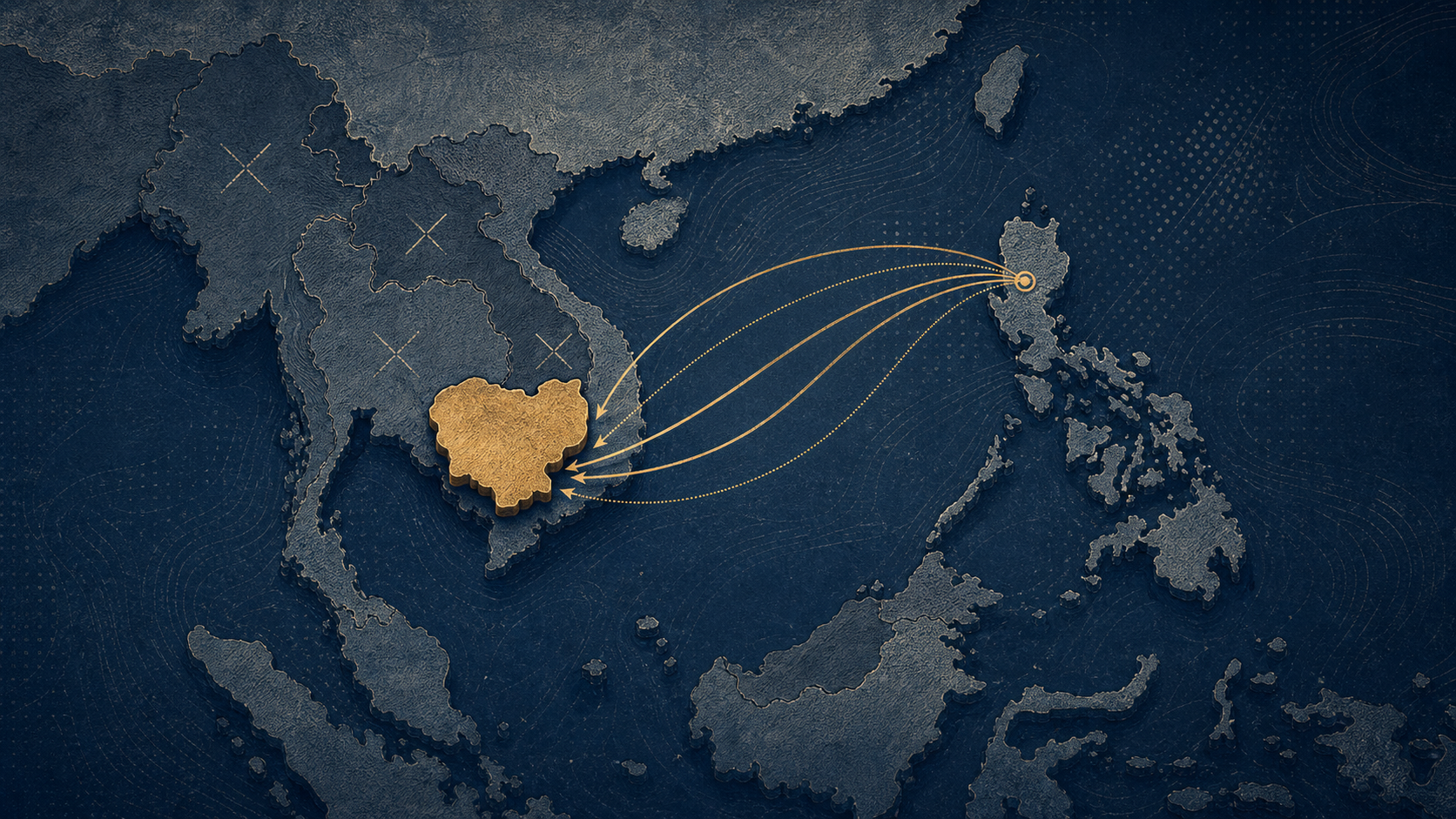
Why Cambodia Won the POGO Refugees: A Geopolitical Read
When the Philippines shut down POGOs in 2024, the displaced operators had options. Vietnam was closed. Myanmar was burning. Laos was too small. Cambodia opened a door — and built a three-tier licensing framework around it. The geopolitics behind a regional rebalancing.

GCash Casino Partnerships Hit 47 in Q2 2026 as Cashless Push Accelerates
GCash's integrations with PAGCOR-licensed gaming operators have grown to 47, with the e-wallet now embedded in nearly every major PIGO and e-Games platform. The pace of integration is reshaping how Filipino players fund accounts — and how regulators monitor the flow.

PIGO vs e-Games: A Regulatory Maze, Mapped
The Philippines has two parallel online gaming license systems, both administered by the same regulator. How they differ, where they overlap, and why the confusion costs operators millions and leaves players unprotected.

Cambodia Gaming License Framework: Three-Tier System Targets Former POGO Operators
Cambodia's new three-tier licensing framework signals Southeast Asia's next regulatory battleground as displaced POGO operators seek new jurisdictions.

PAGCOR Privatization Bill SB 2814 Advances in Senate Committee
SB 2814 proposes separating PAGCOR's role as regulator from operator, marking the most significant restructuring proposal in the agency's 47-year history.