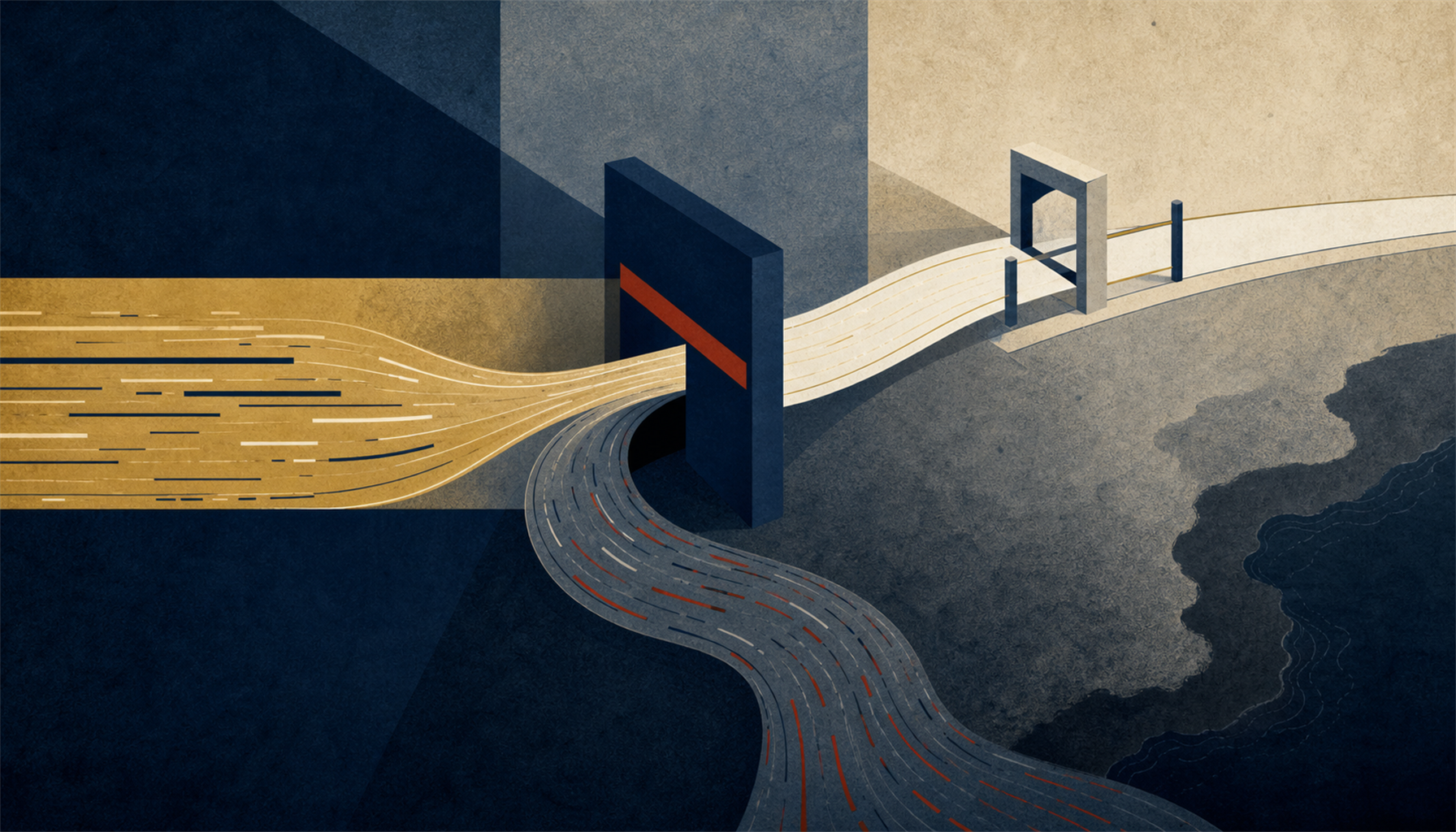
For a year now, the Philippines has been engineering friction into the simplest act in online gambling: moving money into an account. First, in August 2025, the Bangko Sentral ng Pilipinas ordered e-wallet providers like GCash and Maya to sever their direct links to gaming platforms. Then PAGCOR banned credit cards, to stop people betting with borrowed money, and cryptocurrency, to close the channel unregulated sites used to dodge monitoring. None of this was accidental. The friction is the policy. And it is now meeting the single largest surge in betting demand on the calendar — the World Cup — which is exactly the stress test the design was never able to avoid.
Friction as a feature, not a flaw
Start with the logic, because it is sound. A large share of gambling harm is impulse harm — the in-the-moment deposit, the loss chased at 2 a.m. with a tap, the borrowed money staked because the card made it effortless. Every layer of the payment crackdown attacks that mechanism directly. Cutting the instant e-wallet rails removes the frictionless tap. Banning credit cards removes the ability to bet with money you do not have. Banning crypto removes the anonymous, oversight-free rail entirely. Each one inserts a pause, a limit, or a hurdle between the urge and the wager.
The evidence that it bites is unambiguous: after the August 2025 e-wallet order, online gambling transactions fell by roughly 50 percent. We traced the downstream consequences of that order in detail when we looked at the delinking six months on, and at DigiPlus's first cleanly post-delinking quarter, where revenue fell sharply. For a regulator whose stated goal is to shrink the pervasiveness of gambling, a 50 percent transaction drop is not collateral damage. It is the scoreboard.
A 50 percent fall in transactions is a policy success or a policy failure depending entirely on where that money went — into not-gambling, or into channels the regulator can no longer see.
On the ambiguity at the center of the payment crackdownThe leak the design cannot fully close
Here is where the World Cup makes the tension impossible to ignore. The methods PAGCOR has banned — credit cards and, above all, cryptocurrency — are precisely the methods unlicensed offshore operators are most delighted to accept. Crypto is not incidental to the offshore model; it is its preferred rail, because it sits outside Philippine banking oversight by construction. So the crackdown creates two different bettors out of the same blocked deposit.
The first bettor hits the friction, feels the pause, and does not bet — or bets less. For this person the policy worked exactly as intended. The second bettor hits the same friction during the most exciting football of the decade, decides the urge is worth the workaround, and routes to an offshore site that takes crypto without a blink. For this person the policy did not reduce gambling; it relocated it — out of the licensed, monitored, recoverable market and into the one where, as we have documented, the promotions are biggest and the protections are nonexistent. The friction that protects the first bettor is the same friction that pushes the second one off the grid.
Why the World Cup is the worst time to find out which is which
The ratio between those two bettors is everything, and a high-demand tournament tilts it the wrong way. The whole premise of friction-based harm reduction is that a pause is enough to dissolve an impulse. But the World Cup manufactures the strongest, most sustained demand of the cycle — 39 days of near-daily, socially amplified reasons to bet, the dynamic we examined in the exposure-window analysis. The stronger and more durable the demand, the more likely a blocked bettor is to treat the friction as an obstacle to route around rather than a reason to stop. Peak demand is precisely the condition under which a harm-reduction pause is least likely to hold — and most likely to convert into an offshore detour.
This does not mean the crackdown is wrong. It means its success is conditional on something the payment rules alone cannot deliver: actually closing the offshore alternative. Friction on the licensed side only reduces harm if the unlicensed side is hard to reach. That is the real reason the site-blocking campaign and the payment bans are not two separate stories but one. Block the easy deposit without blocking the offshore venue, and you have not closed the tap — you have moved it somewhere darker.
The road back to a monitored channel
PAGCOR appears to understand the trap. Chairman Alejandro Tengco signaled in early 2026 that enhanced safeguards and tighter compliance could eventually let licensed operators reconnect with payment platforms under stricter oversight. The logic of that reversal is the mirror image of the leak: a regulated, monitored deposit channel — with limits, identity checks, and visibility baked in — keeps the harm controls while removing the incentive to go looking for payment offshore. The goal is not maximum friction; it is the right friction, inside a channel the regulator can actually see. The deposit you can watch is safer than the one you have pushed into the dark.
The bottom line
The Philippine payment crackdown is a real, evidence-backed piece of harm reduction, and the 50 percent transaction drop proves it changes behavior. But the World Cup exposes its load-bearing assumption: that a blocked bettor stops rather than reroutes. Whether the friction protects players or merely relocates them turns entirely on whether the offshore door is genuinely shut — which is why the payment bans cannot be judged apart from the site-blocking and the licensing perimeter they depend on. The tournament will, in effect, run the experiment. The result depends less on how hard it is to deposit at a licensed site than on how hard it is to deposit at an unlicensed one.
Frequently Asked Questions
Sources
- GMA News Online, "PAGCOR: Online gambling transactions down 50% since e-wallets ban"
- Philippine News Agency, "Pagcor imposes stricter online gambling regulations"
- PhilNews, "How PAGCOR Protects Filipino Online Gamblers in 2026"
- PAGCOR Chairman Alejandro Tengco, ICE Barcelona remarks (January 2026)
- PH Gaming Intel, "The E-Wallet Delinking Order, Six Months On"
- PH Gaming Intel, "DigiPlus Q1 2026 Net Income Drops 33%"