Every headline tie in the 2026 World Cup's Round of 16, played across July 4-6, came dressed in the same wrapping. Open the app for the biggest last-16 match and the first thing that greets you is not a price but a promotion: a boost. 'Enhanced to +250.' 'Was 4/1, now 6/1 — today only.' 'Price boost on the big one.' It is the most generous-looking object on the whole screen, the house apparently deciding, just this once, to pay you more than it strictly has to. It is also, of everything the sportsbook shows you, one of the most carefully engineered.
This piece offers no tips and no picks. It is about what an odds boost actually is — not a gift, not a slip, but a marketing instrument built to shape your behaviour — and about the gap between how a boost feels and what it does. Some boosts are genuinely improved prices. Almost all of them are also designed to decide which bet you place, how much you stake, and how often you return. Understanding the difference is the whole game.
What a boost is really buying
Begin with the obvious question: why would a business whose entire model is the built-in margin ever advertise a price that lowers it? The answer is that a boost is not a loss; it is a cost of acquisition and engagement, and a cheap one. A sportsbook will happily accept a thinner margin — occasionally, briefly, even a negative one — on a single promoted bet, because that bet reliably does jobs worth far more than it costs: it pulls in new sign-ups, wakes up dormant accounts, and trains existing customers to open the app whenever a big fixture arrives. The lifetime value of a customer drawn in or kept active by boosts dwarfs the price of the occasional enhanced number. The boost is the loss-leader in the shop window; the ordinary full-margin bets it leads to are where the profit lives.
That reframing matters because it explains the timing. Boosts cluster on exactly the fixtures where attention peaks — the marquee last-16 tie, the star team, the game everyone is watching. That is not where a book would give value away by accident; it is where a marketing spend buys the most eyeballs and the most new accounts. The boost is heaviest precisely where the audience is largest, which is the signature of advertising, not generosity. It is the same machinery we described behind the star-power marketing hook and the offshore promo blitz, applied to the price itself.
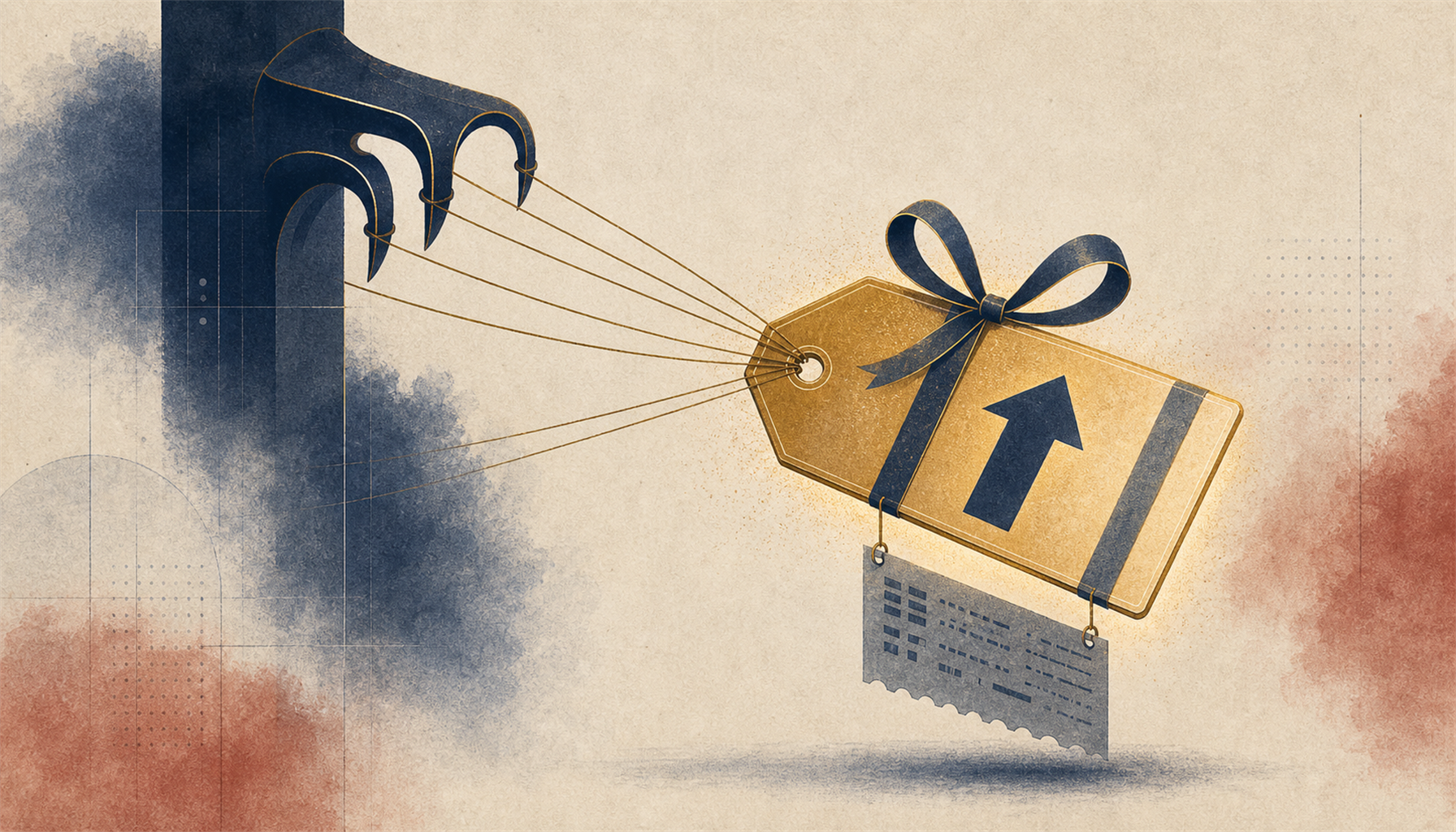
A boost is not the house paying you more than it must. It is the house paying to decide what you bet, how much, and how often you come back.
On reading a promotion as advertisingWhy 'a better price' is rarely the whole story
Suppose the boost is real — the price genuinely is higher than the book would normally offer. Even then, three things usually sit around it. First, the starting price may have been shortened before it was 'boosted', so the enhanced number partly restores value rather than adding it; 'was 4/1, now 6/1' means little if the honest price was always nearer 6/1. Second, boosts carry conditions, and the conditions are where the value quietly drains away: a maximum stake so small that the improved price applies to loose change, a requirement to add other legs at minimum odds, a specific market you must use, wagering requirements before winnings can be withdrawn, or an outright cap on how much you can win. Third — and most important — the boost applies only to the outcome the book chose to promote, which means it is steering you toward a particular bet as much as offering you a particular price.
That steering is the subtle cost. A bettor who came to the app with no plan, or with a different plan, is nudged into backing the promoted selection because it wears the boost. The improved price becomes the reason for the bet, when it should at most be a factor in a bet you already wanted to make. This is the same reversal we traced in the knockout scarcity marketing: a real feature — here, a genuinely higher number — is used to compress the decision, so the bettor skips asking whether to bet at all and how much, and jumps straight to claiming the offer. A boost that changes what you bet or how much you stake has cost you more than it gave, even when the price on its own was fair.
The rare real value, and how to see it
None of this means every boost is worthless. Occasionally an enhanced price genuinely beats fair value on a selection you were going to back anyway, at a stake you had already chosen, with conditions you have read and that do not bite. That is a real, if small, edge, and there is nothing wrong with taking it. The discipline is sequence: decide the bet and the stake first, on their own merits, and only then check whether a boost improves that exact bet — reading the maximum stake, the minimum-odds requirements, the wagering terms and any cap in full before you value it. A boost evaluated after the decision is a bonus. A boost that drives the decision is a hook.
The offshore dimension sharpens the warning. Unlicensed sites aimed at Filipino bettors lead with the most aggressive boosts and 'enhanced odds' of all, precisely because a spectacular price is the cheapest way to pull players outside the regulated market — and outside it, there is no guarantee the terms will be honoured, the winnings paid, or the account protected. A boost that looks far too good is often exactly that, and we set out the wider pattern in our look at how to spot an illegal betting site. The more dazzling the enhanced price, the more reason to check who is offering it and on what terms.
Where this leaves a Filipino reader
As the boosts follow the tournament into the quarter-finals and beyond, three things are worth carrying. First, an odds boost is a marketing instrument, not a gift: it is a loss-leader the book accepts on one bet to win new customers, reactivate old ones, and habituate everyone to the app for the big fixtures. Second, even a genuinely higher price usually comes wrapped in conditions — max stakes, minimum odds, wagering requirements, winning caps — and, more importantly, it steers you toward the outcome the book chose, deciding your bet as much as your price. Third, the rare boost that beats fair value on a bet you already wanted, at a stake you already set, is fine to take; the common one that changes what or how much you bet has cost you more than it gave.
The practical rule is a sequence: settle what you want to bet and how much before you look at any promotion, and let a boost adjust only the price you evaluate, never the decision to bet or the size of your stake. Read every condition in full, and if you want to judge whether an 'enhanced' number is truly better than fair, our odds and implied-probability calculator turns any price into the probability it implies. Stay inside the PAGCOR-licensed market, where deposit and loss limits are required and the terms behind a promotion are subject to regulation, and be especially wary of the biggest boosts from unlicensed offshore sites. If promotions have started to drive how and how much you bet, the responsible-gambling self-assessment is a private, two-minute check, and the National Problem Gambling Helpline answers 24/7 at (02) 8248-9568. A price boost is a pleasant thing to be handed. It is worth remembering whose hand it is, and what the hand is reaching for.
Frequently Asked Questions
Sources
- ESPN, "2026 FIFA World Cup match schedule: Fixtures, results, features"
- NBC Sports, "2026 World Cup Round of 16: Confirmed schedule and knockout bracket"
- UK Gambling Commission, "Gambling promotions and consumer protection: guidance on free bets, bonuses and enhanced odds"
- PH Gaming Intel, "Now or Never: How Knockout 'Last Chance' Marketing Pushes the Single-Match Stake Up"
- PH Gaming Intel, "How to Spot an Illegal Betting Site During the World Cup: A Philippine Player's Checklist"