On June 28, 2026, the 2026 World Cup's new Round of 32 opened with a match that stayed unresolved until almost the last kick. Canada and South Africa were level deep into stoppage time at SoFi Stadium when Stephen Eustáquio struck in the 90+2nd minute, sending Canada through 1-0 as the first team into the Round of 16. For ninety-plus minutes, anyone holding a bet on that game did not know whether it would win or lose. That uncertainty — drawn out, unbearable, decided in a heartbeat — is the emotional core of knockout football. It is also the exact feeling one sportsbook feature is engineered to sell you out of.
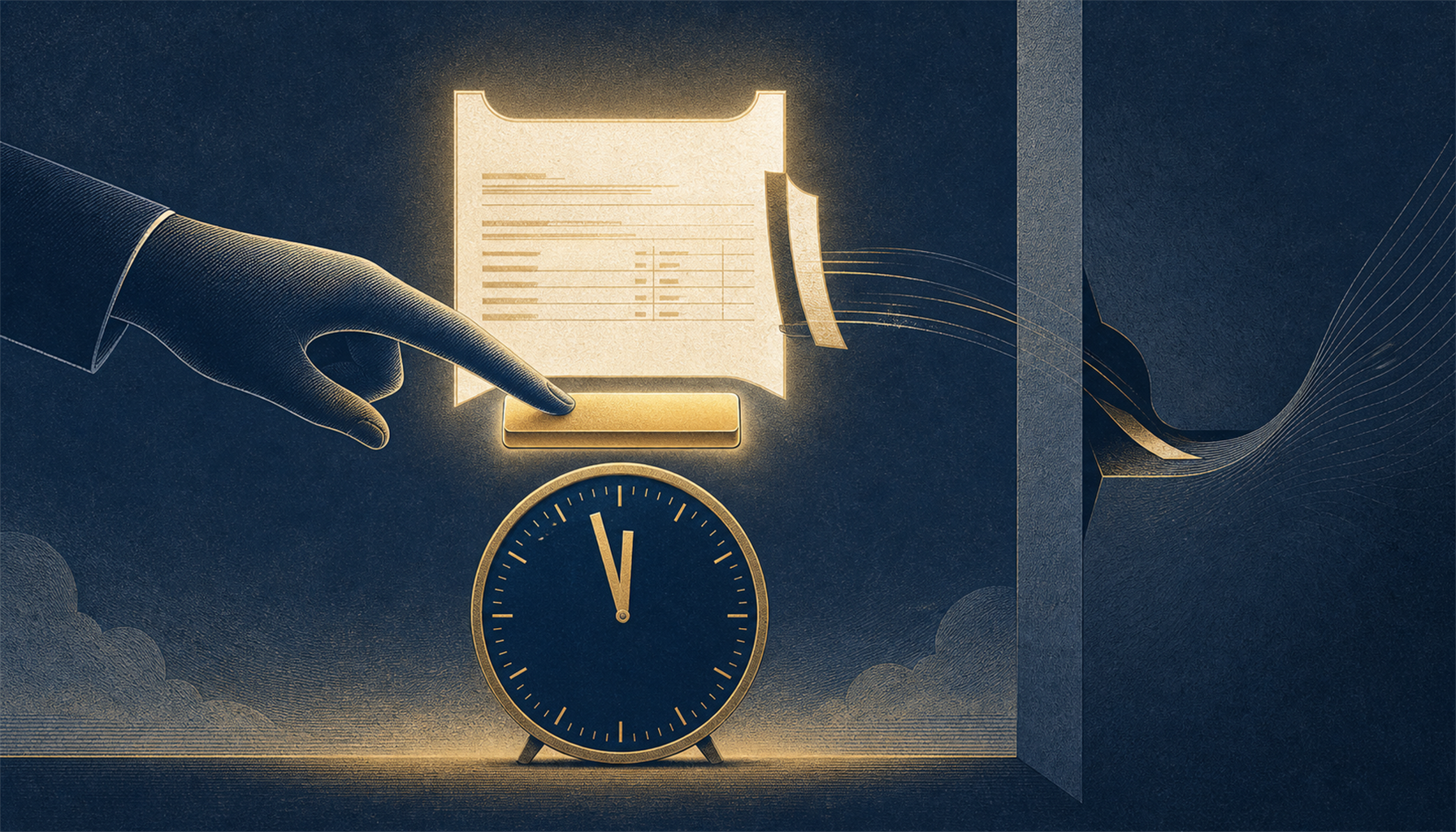
That feature is "Cash Out": the button that offers to settle your open bet early, right now, for a guaranteed amount, before the final whistle decides it for you. We do not publish tips or picks, and this is not one. But as the knockouts fill the board with tight, late-swinging games, cash-out is about to be the most-pressed button in the app — and most bettors press it without realising it is a market the bookmaker prices, with its own margin baked in, designed so that the certainty you are buying costs you more than it looks.
What cash-out actually is — a market, not a courtesy
Cash-out looks like a customer-service feature: a flexible escape hatch the sportsbook generously offers so you are never trapped in a bet you have changed your mind about. That framing is the product. In reality, cash-out is a live re-pricing of your open position. The operator looks at the current state of the game, reads it through the live odds — the in-play prices it is already running with its margin attached — and quotes you a number to settle now. If your bet is winning, the number is a profit smaller than your full potential return. If your bet is losing, the number is a partial refund of your stake. Either way, it is the bookmaker buying your bet back at a price the bookmaker chooses.
The key fact is where that price comes from. It is not a neutral, fair-value estimate of your position. It is derived from odds that already contain the house edge, and then, at most operators, trimmed further by a cash-out-specific haircut. So the amount you are offered to walk away is, on average, less than your bet is mathematically worth given the scoreline and the time left. You are not escaping the margin by cashing out. You are paying it a second time for the comfort of locking in a result before the football decides one.
Cash-out doesn't take you out of the house edge. It charges you the edge again — for the feeling of certainty in a game that hasn't ended.
On what the button actually sellsWhy the knockouts make the button irresistible
Every feature has a moment it is built for, and cash-out's moment is the closing stretch of a tight knockout tie. The single-elimination format the Round of 32 just introduced means there is no second leg, no points cushion, no "we'll get them next game" — the result in front of you is the whole story, and we explored how that raises variance for the bettor in its own right. Canada's 90+2 winner is the proof: a game that could have been a goalless draw, a Canada win, or a South Africa smash-and-grab right up to the final seconds.
That structure manufactures anxiety on a schedule. In the 80th minute of a one-goal knockout, a winning bet feels desperately fragile — one equaliser and it is gone — and a losing bet feels like a wound you could still partly stop. Both feelings push toward the same button. And the button is always on screen, glowing, with a number attached, during precisely the minutes you are least able to think clearly. The design and the emotion are aligned: the moment you most want certainty is the moment the operator most wants you to buy it, at the price it has set.
This is the same machinery behind live in-play betting in general — a product built to convert the speed and emotion of a live match into more decisions, faster, with less reflection between them. Cash-out is in-play's pressure valve, and the late-goal drama the knockouts are famous for is its busiest hour.
The two cash-outs, and why both favour the house
It helps to separate the two situations, because they feel completely different but lead to the same place. The first is the winning cash-out: your team is ahead, the offer is a guaranteed profit, and taking it feels like locking in a smart result. The catch is that the offered profit is smaller than your full payout, and the gap between them is wider than the true probability of your lead being overturned would justify — that gap is the operator's. Cash out every winning position and you systematically clip your own upside; let them all run and you would, on average, end up ahead of the cash-out path, even though some individual bets would be lost to late equalisers.
The second is the losing cash-out: your team is behind, the offer is a partial refund, and taking it feels like cutting your losses like a disciplined trader. But the refund is calculated to be less than the fair value of your slim remaining chance, and — more dangerously — taking back part of your stake hands you cash and a fresh emotional slate in the middle of a tournament full of other games. That is the trapdoor into chasing the loss: the partial refund becomes the stake for the next bet, placed to "make it back", at the moment your judgment is worst. The button that felt like discipline becomes the on-ramp to the riskier wager.
Where this leaves a Filipino reader
As the Round of 32 delivers more games like Canada–South Africa — tight, late, decided in stoppage time, extra time, or penalties — the cash-out button will be working its hardest. Three things to carry into it. First, cash-out is a priced market, not a courtesy: the number you are offered comes from odds that already hold the house edge and is usually shaved again, so on average you settle for less than your position is worth. Second, the urge to press it spikes with emotion, not with new information — the late-goal anxiety the knockouts are built on is exactly the state in which a "guaranteed" number looks smartest and is least examined. Third, both the winning cash-out (clipping your upside) and the losing cash-out (funding the chase) tilt toward the operator, which is why the feature exists at all.
The defence is unglamorous and works: decide what you are willing to lose before you place the bet, stake only that, and treat the result as already spent the moment you confirm it — so you never need a panic-button to rescue a game gone wrong. If you want to see how much edge is hiding in a live price, run it through our odds and implied-probability calculator before you accept any cash-out figure. Stay inside the PAGCOR-licensed market, where deposit limits, loss limits and time-outs are required, and switch them on before the knockouts, not after. If you notice your bets are being steered by anxiety rather than choice, the responsible-gambling self-assessment is a private, two-minute check, and the National Problem Gambling Helpline answers 24/7 at (02) 8248-9568. Eustáquio's 90+2 winner is what makes knockout football unforgettable. It is also why the button beside your bet has never looked more tempting — or cost more to press.
Frequently Asked Questions
Sources
- FIFA, "South Africa v Canada 0-1 | Result, Stats & Highlights | Round of 32 | FIFA World Cup 2026"
- Yahoo Sports, "World Cup Round of 32 live updates" and "World Cup schedule, results: Canada advances to Round of 16 after dramatic late goal"
- Olympics.com, "FIFA World Cup 2026 – Every match result on Sunday 28 June – Live scores"
- PH Gaming Intel, "Live (In-Play) Betting Explained: The Product the World Cup Is Built to Sell"
- PH Gaming Intel, "One Game, One Coin Flip: Why Single-Elimination Knockouts and 'Road to the Final' Bracket Bets Multiply the House Edge"