The 2026 World Cup has narrowed to eight, and the quarter-finals of July 9-11 are the kind of ties that do not lend themselves to a confident match-winner bet. Spain against Belgium, Argentina against Switzerland — these are close, even games, the sort where the last-16 round already served up a goalless 120 minutes and a shootout between Switzerland and Colombia. On a tight fixture the sportsbook tends to stop leading with the plain three-way price and start promoting something that wears a more comforting label: draw-no-bet, and the Asian handicap. 'Back them with the safety net.' 'Give them a goal start.' 'Your stake back if it finishes level.'
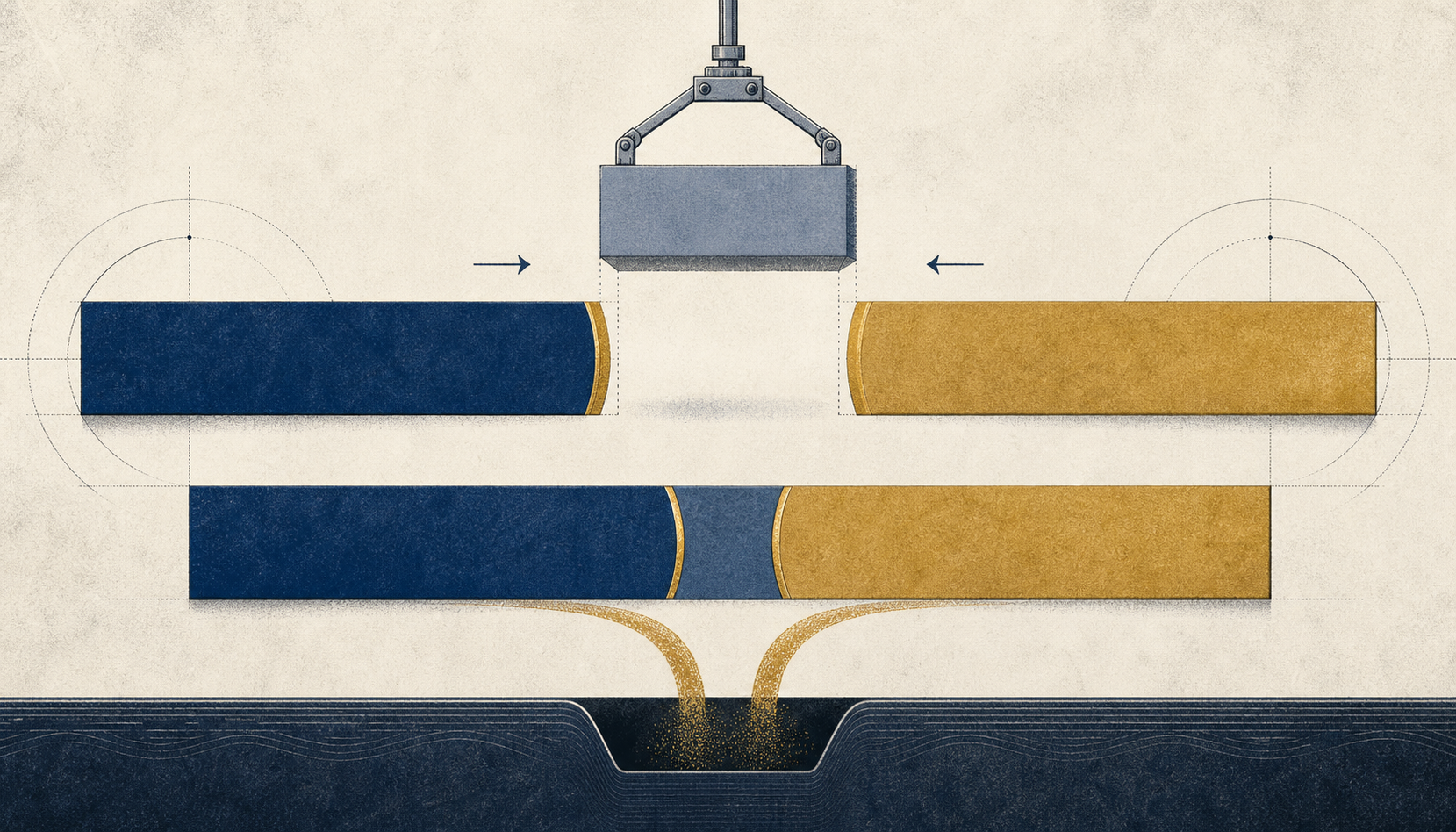
This piece has no tips and no picks. It is about what those markets actually are underneath the reassuring language. Draw-no-bet and Asian handicap do something real — they change the shape of the risk, remove or split the draw, and turn an awkward match into a near-even proposition. What they do not do is what the framing quietly implies: they do not remove the bookmaker's margin. They relocate it into a shorter price. Understanding where the edge goes when the draw comes out is the whole point.
What 'removing the draw' actually does
The plain match-winner market — 1X2 — offers three outcomes and makes you carry all three. Back a team to win and you lose if it draws and lose if it loses; the draw is a full third of the outcome space and, in tight knockout football, a genuinely common result, as Switzerland and Colombia demonstrated by playing out 120 goalless minutes in the previous round. Draw-no-bet takes that third away: your team wins, you win; your team loses, you lose; the match is level after 90 minutes, you get your stake back. One of the three doors that could cost you has been quietly closed.
Nothing about that is free. The price on a draw-no-bet selection is always shorter than the same team's outright win price, because the refund on a draw is a benefit and the book charges for benefits. You have not been handed a safer bet at the same value — you have paid, in a reduced payout, for the removal of the draw. The Asian handicap does a related job by a different route: instead of refunding the draw, it moves the goalposts, giving one side a virtual head start (+0.5, +1) or deficit (-0.5, -1) so that the contest prices up near even money. Half-goal lines eliminate the draw outright; whole-goal lines can refund it. In every case the mechanism changes and the margin does not: the bookmaker's edge is still sitting inside the numbers on both sides.
Removing the draw does not remove the house edge. It moves it — out of the list of outcomes and into the length of the price.
On what a 'safety net' market really sellsWhy 'safer' is not 'better value'
The most important confusion these markets create is between variance and value. Draw-no-bet and the friendlier handicap lines genuinely lower how often you lose your stake outright — that part is true. But lower variance and better value are different things, and the price is where they part company. Because you pay for the safety with a shorter number, the expected cost of the bet, once the built-in margin is counted, is unchanged at best and worse at worst. A safer bet at a worse price is not a smarter bet; it is the same house edge wearing a calmer face. The reassurance is real as a feeling and empty as an edge.
There is a second, quieter cost. A tight quarter-final does not arrive with one market attached; it arrives with dozens — match winner, draw-no-bet, several handicap lines, plus the goal and scoreline markets we examined in our look at derivative goal markets. Each is a slice of the same 90 minutes, and each carries its own margin. A bettor who spreads stakes across three or four of them on a single game is not diversifying risk; they are paying the house edge three or four times over on one match. The abundance of 'ways to bet' on a close tie is not a menu of safer options — it is the same edge, resold.
Reading the market instead of the label
The discipline here is unglamorous: know exactly what you are settling on before you stake. Which outcomes win the bet, which refund it, which lose it — draw-no-bet, a -1 handicap and a +0.5 handicap on the 'same' team are three different bets with three different settlement rules and three different prices. This is the same literacy gap we set out around 90-minute versus to-advance settlement: the mistake is not usually a scam, it is assuming a market pays out on the thing you pictured rather than the thing written in the rules. A handicap that looks like a gift can settle as a loss on a result you would have called a win.
The offshore angle is the familiar one. Unlicensed sites often advertise unusually generous handicap lines and draw-no-bet prices precisely because a number that looks a shade better than everyone else's is the cheapest way to pull a Filipino bettor outside the regulated market — where the terms may not be honoured, the winnings may not be paid, and the account has no protection. A line that seems too favourable is a reason to ask who is offering it, a pattern we set out in our guide to spotting an illegal betting site.
Where this leaves a Filipino reader
As the quarter-finals bring out the safety-net markets, three things are worth carrying. First, draw-no-bet and Asian handicap are real tools that change the shape of the risk — they remove or split the draw and turn tight ties into near-even bets — but they do it by moving the bookmaker's margin into a shorter price, not by removing it. Second, lower variance is not better value: a safer bet at a worse price leaves the expected cost unchanged or higher, so 'safer' should never be read as 'smarter'. Third, a close match comes with many markets, and spreading stakes across them is paying the house edge several times on one game rather than diversifying anything.
The practical rule is to read the settlement, not the label: know which results win, refund and lose before you stake, and treat a shorter price for lower variance as exactly the priced product it is. If you want to see what any of these numbers implies about a team's real chance, our odds and implied-probability calculator turns a price into the probability behind it and exposes the margin inside a full market. Stay inside the PAGCOR-licensed market, where terms are regulated and deposit and loss limits are available, and be wary of offshore lines that look a little too kind. If the sheer number of markets on one match is drawing you into more bets than you planned, the responsible-gambling self-assessment is a private, two-minute check, and the National Problem Gambling Helpline answers 24/7 at (02) 8248-9568. Taking the draw out of the picture is easy. Taking the edge out is not something the market is offering to do.
Frequently Asked Questions
Sources
- ESPN, "2026 FIFA World Cup match schedule: Fixtures, results, features"
- Olympics.com, "FIFA World Cup 2026: How to watch Belgium vs Spain in the quarter-finals"
- UK Gambling Commission, "Betting markets and consumer information: guidance"
- PH Gaming Intel, "Slices of One Game: How Derivative Goal Markets Hide a Fatter Margin"
- PH Gaming Intel, "Three Finish Lines: 90-Minute Result vs To-Advance Markets in the Knockouts"