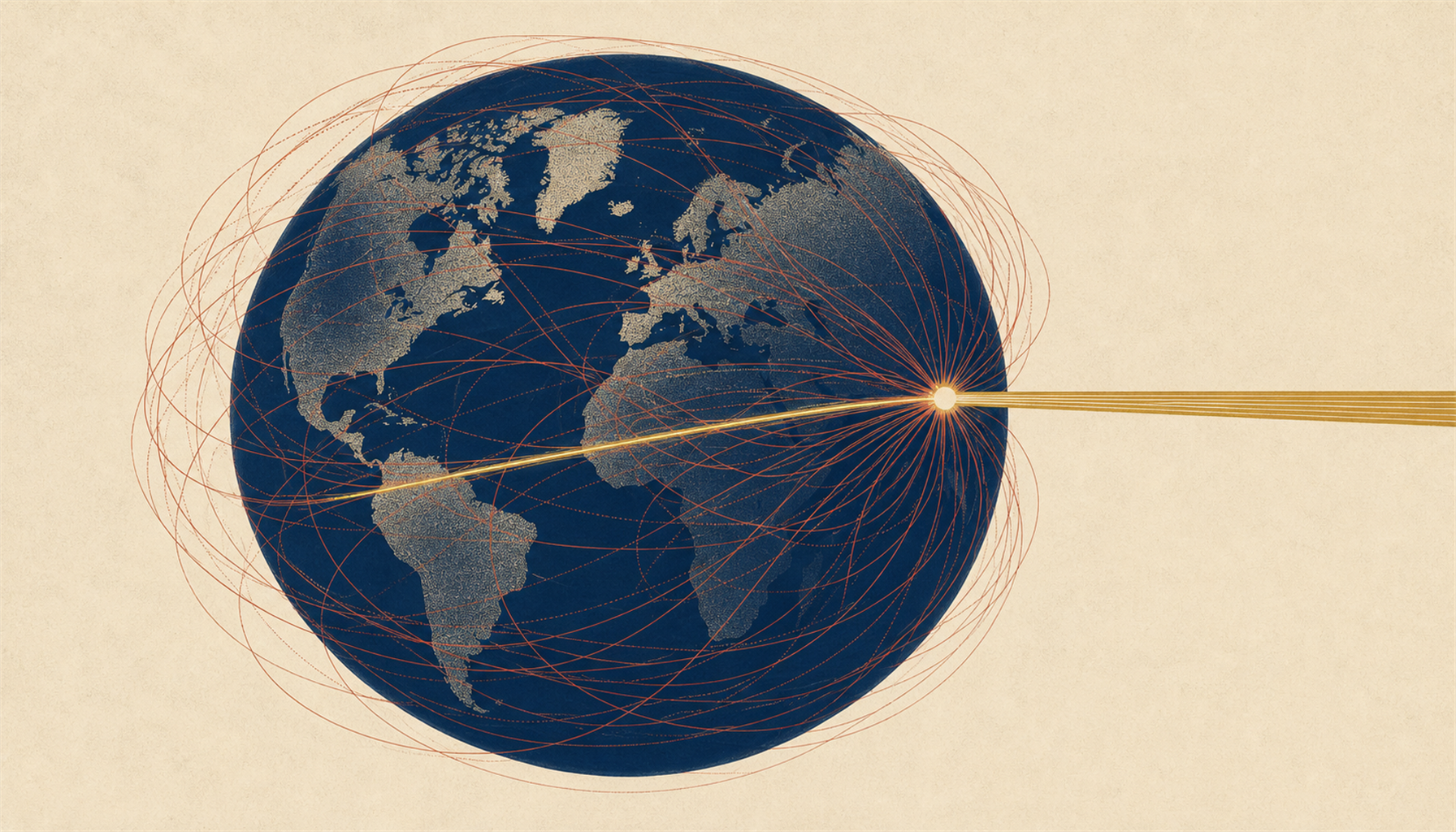
The headline number attached to the 2026 World Cup is not a transfer fee or a prize pot. It is a betting forecast: more than 50 billion dollars wagered globally on the tournament, which would make it the largest single betting event in human history. That figure is the visible surface of a deeper change in how football and betting relate to each other — one that has moved the sport's own governing body closer to the wagering business at the very moment integrity specialists are sounding an unusually direct alarm. For a Filipino fan, the 50-billion number is worth understanding not as a curiosity but as a map of where the money is actually flowing, and how little of it sits inside the licensed market.
What the 50-billion figure actually counts
A number that large is easy to wave past, so it is worth being precise about what it represents. The forecast spans the entire global betting market — regulated sportsbooks, unregulated offshore sites, and the newer category of prediction-market platforms — across every jurisdiction that will wager on the tournament. It is an estimate, not a settled total, and it bundles a vast regulated market in places like the United States and Europe with a large unregulated one elsewhere. But the drivers behind it are real and structural: an expanded 48-team, 104-match format that creates far more betting markets than the old 64-match tournament; the maturation of fast in-play and micro-betting; and the spread of online and crypto-funded wagering since 2022. More matches, more bet types, more channels. The total is the product of all three multiplying at once.
That scale matters to the integrity story because volume is opportunity. The bigger the legitimate market, the easier it is for manipulated activity to hide inside it, and the more lower-stakes fixtures — the dead-rubber group games — there are to probe. We laid out how the monitoring system responds to this in our piece on the integrity net around the tournament. The 50-billion figure is the demand-side counterpart: it is the size of the haystack the monitoring needle has to search.
The sport spent a generation keeping betting at arm's length. It is now signing the contracts, licensing the data, and selling the proximity — while its own integrity advisers say, for the first time, that they are worried.
On the tension inside football's relationship with the betting industryFootball's own move toward the betting business
The quieter half of the story is institutional. Over the past few tournament cycles, FIFA has moved from arm's-length distance to commercial proximity with the betting world. It has signed betting-operator partnerships, licensed official betting data and streaming rights through a major data distributor, and engaged with prediction-market and integrity-monitoring firms as part of the same commercial expansion. The logic is straightforward — betting interest drives engagement, and engagement is monetizable — but it places the governing body in the position of both policing manipulation and profiting from the proximity that creates the risk.
Integrity researchers have flagged the specifics. The expansion has reportedly seen official tournament-adjacent streams reach jurisdictions where betting is prohibited, and prediction-market partnerships introduce a product class that experts find harder to monitor than a conventional regulated bookmaker. One veteran integrity specialist's assessment was blunt: for the first time, he was worried about betting-related corruption at a World Cup. That is not a routine pre-tournament caution. It is a change in the baseline level of concern from the people whose job is to be worried professionally.
Why prediction markets and crypto are the new soft edge
The piece of this most relevant to a Filipino reader is the rise of prediction markets and crypto-funded wagering, because that is where the offshore risk is migrating. Prediction markets let users trade contracts on event outcomes — economically much like betting, sometimes regulated as something else. Integrity experts have warned that some of these platforms can involve anonymous accounts, cryptocurrency funding, and customers far from the events being traded: precisely the attributes that make activity hard to monitor and easy to launder through. That is why prediction markets are restricted or banned outright in 50-plus countries.
For the Philippines, this maps directly onto the fault line that runs through every story on this site. A prediction-market or crypto-funded wager is, in practical terms, an offshore, unlicensed wager: outside PAGCOR's perimeter, outside the integrity-monitoring net that watches regulated bookmakers, and outside the source-of-funds and consumer-protection rules a licensed operator must follow. It is also, as we argue in our analysis of the FATF grey-list risk, exactly the kind of untraceable money-flow that puts the country's financial standing at risk. The 50-billion global figure includes Filipino money, and the share of it moving through these channels is the share nobody can see.
The bottom line
The 2026 World Cup will be the most-wagered event ever, north of 50 billion dollars, arriving as football's own institutions move closer to the betting business and its integrity advisers voice first-of-its-kind concern. The growth is not just bigger; it is moving toward prediction markets and crypto channels that are harder to watch than anything before. For a Filipino fan, the global headline reduces to a local rule that has not changed: the licensed market is the one inside the monitoring and protection system, and the offshore, prediction-market, and crypto corners — however slick the World Cup promotion — are the ones where the money, and the risk, disappear from view. Verify the operator before you bet, and treat crypto-only and prediction-market platforms as exactly the part of that 50 billion you do not want to be standing in.
Frequently Asked Questions
Sources
- Global News, "World Cup could see global betting volume exceed $50B, new forecast warns"
- Play the Game, "FIFA's betting expansion raises integrity fears ahead of the 2026 World Cup"
- InterGame, "World Cup Betting Trends & Statistics: 2026"
- PH Gaming Intel, "The Integrity Net Around the 2026 World Cup — and the Offshore Gap It Cannot Cover"
- PH Gaming Intel, "The Grey List Risk Behind the World Cup Betting Surge"
- PH Gaming Intel, "How to Spot an Illegal Betting Site During the World Cup: A Philippine Player's Checklist"