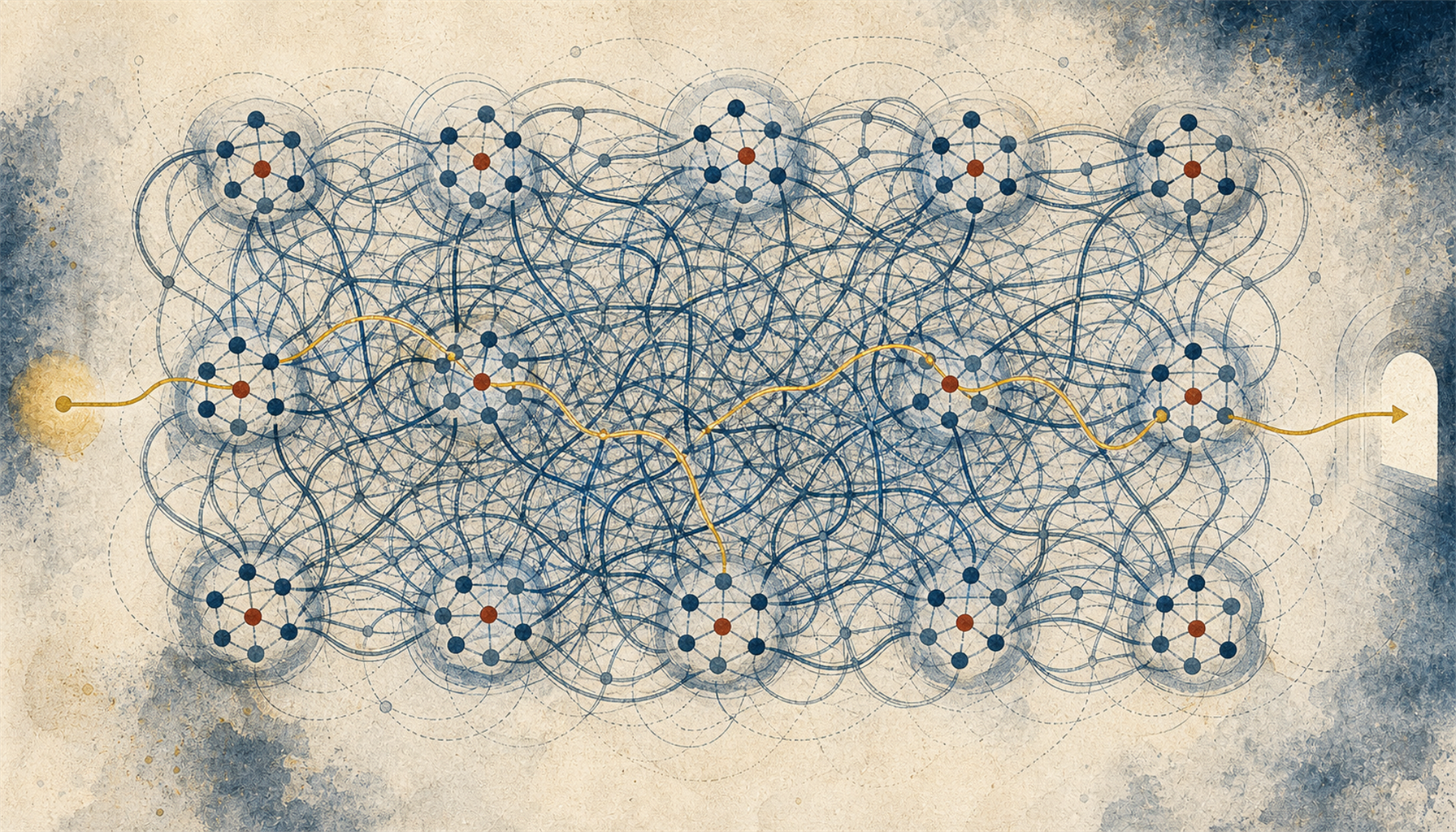
Somewhere around the second round of group matches, a World Cup stops being easy to read — and the 2026 edition, the first with 48 teams, gets there faster and more confusingly than any before it. By June 22-23, the group tables had thickened into a puzzle. France, Norway and Argentina had booked their places; Jordan and Türkiye were out. But for most of the field the question "are they actually through?" no longer had a simple answer, because in this format it is not just the top two from each group who advance. The eight best third-placed teams go through as well — and figuring out which eight means comparing records across twelve groups that have not all finished playing.
We do not publish tips or picks, and this is not one. But that tangle is worth understanding for a reason that has nothing to do with who qualifies. The betting markets that sit on top of the group stage — "to qualify", "to win the group", "to go through as a best third" — are priced on exactly this complexity. And in betting, complexity is rarely neutral. More often than not, it is the house's friend.
The maze the new format builds
The mechanics are simple to state and hard to track. Forty-eight teams, twelve groups of four. The top two in each group advance automatically: twenty-four teams. They are joined by the eight best third-placed teams from across all twelve groups, bringing the knockout field to thirty-two. The first half of that is intuitive. The second half is where heads start to hurt, because ranking the third-placed teams means comparing points, then goal difference, then goals scored, and further tiebreakers — between teams in different groups, some of whom have not yet played their final match.
The practical result, right now, is a standings table where a team can be third in its group and through, or third and out, depending on results in five other groups that have not happened yet. That is genuinely difficult to reason about. It is also exactly the moment the betting board offers you a clean-looking price on "Team X to qualify" — a single tidy number sitting on top of a calculation almost no recreational bettor is actually doing.
The price looks simple. The thing it is pricing is not. That gap — between a tidy number and a tangled outcome — is where the house lives.
On scenario markets and the new formatWhy confusion is a product, not a bug
A bookmaker makes money from the gap between the true probability of an outcome and the price it charges you for it. On a simple market — a two-way match, a coin-flip total — that gap is relatively easy to spot, because you can form your own estimate and compare. You can even run the price through our odds and implied-probability calculator to see the implied chance and the margin baked in. The discipline only works, though, if you have an honest probability of your own to check it against.
That is precisely what a permutation-dependent qualification market denies you. To judge whether "Team X to finish as a best third-placed team" is fairly priced, you would need to model results across multiple unfinished groups and the full tiebreaker chain. Almost nobody does. So the price floats free of any check the casual bettor can apply — and a bookmaker can sit a comfortably wide margin inside it without anything looking unfair, because there is no obvious reference point to make it look unfair. Complexity does not create the edge. It conceals it. The harder a market is to evaluate, the more quietly the house can price it in its own favor.
A familiar feature wearing a new face
We have written before that the 48-team format stretches the betting-exposure window to the longest in history — more teams, more matches, more days of temptation. The qualification maze is the same expansion seen from a different angle: the format does not just add duration, it adds complexity, and complexity is its own kind of risk. A bigger tournament generates more of the intricate, scenario-laden markets that feel sophisticated to bet and are hard to evaluate well — and "feels sophisticated, hard to evaluate" is a near-perfect description of where casual bettors lose money believing they are being clever.
This is not an accusation that scenario markets are rigged. They are not. It is an observation about where the odds of you coming out ahead actually sit. A market you cannot explain the fairness of is a market you are betting blind, however confident the bet feels. The 48-team format simply manufactures a great many more of those than any World Cup before it.
Where this leaves a Filipino reader
None of this is a verdict on any team's chances or on qualification betting as a category. It is a test you can apply to any market the group stage throws up. Three things carry from this permutation maze to every "to qualify" price you will see. First, the 48-team format makes group-stage outcomes genuinely complex — dependent on other groups and on tiebreakers — even when the price looks reassuringly simple. Second, complexity hides the bookmaker's margin rather than removing it, because a casual bettor has no honest probability to check the price against. Third, if you cannot explain why a price is fair, you are betting on your own confusion, which is the single most profitable bet the house can take from you.
If you do bet, the rest of our coverage applies without exception. Stay inside the PAGCOR-licensed market, where you have monitoring and recourse. Before any scenario bet, do the honest test from our explainer on reading World Cup odds without fooling yourself: can you state, in your own words, why this price is roughly fair? If not, that is information — it means the market is harder to read than your wallet would like. Treat any stake as the price of entertainment, set deposit and time limits before kickoff, and if betting has stopped feeling like a choice, the responsible-gambling self-assessment is a private, two-minute check, with the National Problem Gambling Helpline answering 24/7 at (02) 8248-9568. The permutation maze is a wonderful thing for a fan refreshing the tables. For a bettor, it is the board at its most flattering — and its most expensive.
Frequently Asked Questions
Sources
- FIFA, "Standings, Group Tables & Brackets | FIFA World Cup 2026"
- ESPN, "2026 World Cup: How teams can advance to the knockout rounds"
- CBS Sports, "2026 FIFA World Cup standings: Group stage table, results"
- Yahoo Sports, "World Cup 2026 knockout stage tracker"
- PH Gaming Intel, "48 Teams, 104 Matches, 39 Days: Why the 2026 World Cup Is the Longest Betting-Exposure Window in History"
- PH Gaming Intel, "Football Betting Odds Explained: How to Read World Cup Markets Without Fooling Yourself"