The story of Philippine gaming policy is typically told through PAGCOR — the Philippine Amusement and Gaming Corporation, the country's primary gaming regulator, the issuer of the PIGO and e-Games licenses that now dominate the licensed online gambling sector, the agency whose chairman testifies at Senate hearings and whose memoranda shape the operating environment for the major operators. The PAGCOR-centric narrative is the right narrative for most policy questions. But it is not the only narrative.
Running parallel to PAGCOR through most of the post-1990s history of Philippine gaming is a second narrative built around the country's special economic zones. The Cagayan Economic Zone Authority and the Aurora Pacific Economic Zone and Freeport Authority were the two zones that held independent gaming-licensing authority under their own founding charters, operating in parallel to PAGCOR rather than under it. The zones' gaming-licensing regimes were smaller in absolute scale than PAGCOR's frameworks were at their peak, but their existence shaped the political and regulatory architecture of Philippine gaming in ways that the PAGCOR-centric narrative does not fully capture.
This is the story of those zones: their origins, their gaming-licensing histories, their relationship to the POGO era that the 2024 termination ended, and their place in the substantially reorganized 2026 Philippine gaming regulatory landscape. The CEZA position — that the zone "never was and never will be" a host of POGOs, in the words of its administrator Katrina Ponce Enrile — sits at the center of the account. So does the quieter Aurora trajectory, which followed a different path under similar founding-statute authority. Together, they describe a corner of Philippine gaming history that the post-2024 unified-regulatory environment has flattened but not erased.
The Cagayan origin
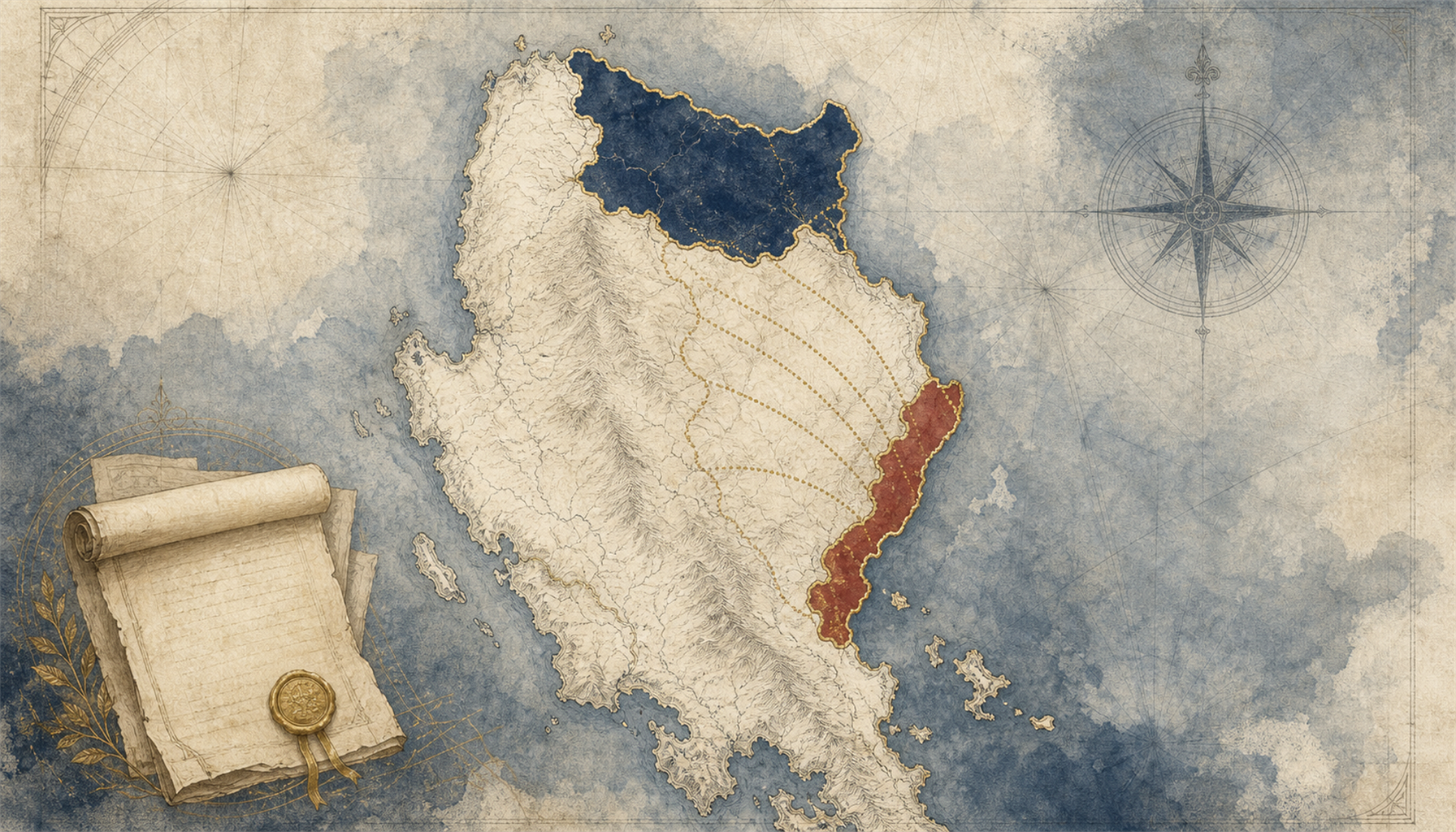
The Cagayan Economic Zone Authority was established under Republic Act No. 7922 in 1995, during a wave of Philippine special-economic-zone creation that was designed to attract foreign investment and to develop economic capacity in provinces outside the Metro Manila industrial concentration. The Cagayan zone covers a substantial geographic footprint in northeastern Luzon — the country's largest island and the location of the eponymous province — and was authorized under its founding statute to operate as a freeport with substantial regulatory autonomy from the national-level administrative agencies.
The gaming-licensing authority was part of the original CEZA mandate. The agency was authorized to grant licenses for online gaming operations targeting offshore markets, with the licensing framework operating under CEZA's own regulatory architecture rather than under PAGCOR's. The decision to give CEZA independent gaming authority reflected the broader 1990s policy logic of special economic zones: that the zones would attract investment by offering regulatory and tax frameworks more accommodating than those available outside the zone perimeter.
The Cagayan iGaming licensing framework that resulted was structurally different from the later PAGCOR POGO framework. CEZA's iGaming licensees operated under a distinct set of operational requirements, paid licensing fees to CEZA rather than to PAGCOR, and were subject to CEZA's own compliance monitoring rather than to the PAGCOR enforcement architecture that would later be applied to POGOs. The two frameworks coexisted in parallel for most of the period from the mid-2000s through the early 2020s, with the CEZA framework substantially smaller in absolute scale but distinct in its regulatory identity.
The CEZA position on POGOs
CEZA's public position on the POGO framework has been categorical and consistent. CEZA administrator Katrina Ponce Enrile has stated, in language that has been repeated across multiple agency communications, that there "never was and never will be" POGOs in the Cagayan special economic zone. The framing is precise. POGOs — Philippine Offshore Gaming Operations — were the specific operator category licensed under PAGCOR's separate framework. CEZA's iGaming licensees were not POGOs in this strict definitional sense, even though both categories of operators served offshore online gambling markets.
The distinction is more than semantic. CEZA's framing positions the agency as having operated under a distinct, independently-administered regulatory architecture that was not subject to the failure modes that produced the 2024 POGO termination. The criminal-spillover concerns, the labor-rights documentation, the human-trafficking findings, and the broader political-economy considerations that drove the Marcos administration's POGO ban were directed at PAGCOR-licensed POGOs specifically, not at the CEZA iGaming framework. CEZA's continued public emphasis on the distinction is the agency's attempt to preserve some space for its own gaming-licensing identity even as the broader Philippine gaming regulatory environment has been substantially unified.
Whether the distinction is fully sustainable as a matter of regulatory architecture is a separate question. Executive Order 74, issued in November 2024 and effective January 1, 2025, banned both POGOs and Internet Gaming Licensees (IGLs) across the Philippine regulatory perimeter. The IGL category was the technical classification that captured many of the CEZA iGaming licensees, and the EO 74 effect was therefore to terminate the substantive CEZA gaming-licensing activity even if the agency continues to distinguish its framework from the POGO framework in its public communications.
"The CEZA position is technically correct — the agency never licensed an operator under the PAGCOR POGO framework specifically. But the substantive economic activity that CEZA's iGaming framework supported was, in the eyes of the 2024 policy makers, sufficiently similar to POGO activity to justify being captured under the same regulatory termination. The distinction CEZA emphasizes is real. So is the practical result of EO 74."
Manila-based regulatory policy analyst familiar with the special-economic-zone gaming history, May 2026The 70/30 workforce ratio
CEZA's iGaming licensing framework included workforce-composition requirements that were materially different from those that prevailed at most PAGCOR-era POGO operations. The agency mandated a 70 percent Filipino, 30 percent expatriate workforce ratio across iGaming operator employment in the zone. The ratio was monitored at the agency level and applied as a condition of continued licensing.
The 70/30 ratio is structurally significant for understanding the labor-economy dimension of the CEZA framework. POGO-era operations in the broader Manila-and-surrounding-area concentration that the 2024 termination targeted were characterized by substantially higher foreign-worker concentrations, particularly Chinese-national workforces brought in to support Mandarin-language customer-service operations directed at the Chinese mainland online gambling market. The labor-rights concerns that drove the POGO termination — the trafficking findings, the worker-treatment documentation, the visa-status complexities — were substantially concentrated in those operations.
The CEZA 70/30 ratio meant, in operational practice, that the Cagayan iGaming workforce was structurally more Filipino than the comparable POGO workforce. The labor-rights concerns that produced the POGO termination were, at the CEZA level, materially less acute. This is part of what underlies CEZA's continued positional emphasis that its framework was substantively different from the POGO framework: the workforce-composition difference was real and was reflected in the operational profile of the Cagayan iGaming sector throughout its active period.
Aurora's parallel path
The Aurora Pacific Economic Zone and Freeport Authority — APECO — was the second Philippine special economic zone that held independent gaming-licensing authority under its founding charter. APECO covers the Aurora province on Luzon's Pacific coast, with a smaller geographic footprint than CEZA and a substantially smaller economic-development profile. The agency was created in the 2000s with a charter that included gaming-licensing authority broadly comparable to CEZA's, including the explicit power to operate or approve licenses for gambling businesses such as POGOs.
APECO's gaming-licensing activity has historically been substantially smaller than CEZA's. The Aurora zone never developed the iGaming-operator concentration that the Cagayan zone hosted at its peak, and the substantive gaming activity under APECO's licensing authority remained limited in absolute scale. The 2024 POGO ban under EO 74 curtailed whatever residual gaming authority APECO retained, and the agency's gaming-licensing role in the contemporary Philippine regulatory environment is minimal.
The APECO history is nonetheless relevant to understanding the Philippine special-economic-zone gaming architecture because it demonstrates that the CEZA framework was not unique. The 1990s and 2000s waves of special-economic-zone creation routinely included gaming-licensing authority as a possible regulatory power that the zones could exercise. CEZA developed that authority into substantive operational scale; APECO did not. The variance reflects local political-economy factors and specific zone-level investment-attraction strategies rather than fundamental differences in the underlying statutory authority.
The 2024 inflection
The November 2024 issuance of Executive Order 74 and its January 1, 2025 effective date represented the comprehensive unification of the Philippine gaming regulatory environment under the PAGCOR perimeter. The EO banned both POGOs and Internet Gaming Licensees across all Philippine territory, including the special economic zones that had previously operated under independent gaming-licensing authority. The structural effect was to eliminate the parallel-regulatory architecture that CEZA and APECO had operated within and to bring all Philippine gaming-licensing activity under a single national framework.
For CEZA, the practical effect was the termination of the agency's substantive iGaming licensing role even as CEZA continued to operate as a freeport and special economic zone with its broader non-gaming regulatory authority intact. The agency's gaming-sector portfolio post-EO-74 has been residual: ensuring compliance with the ban, supporting any winding-down of prior iGaming operations, and adjusting the zone's investment-attraction strategy toward non-gaming sectors that the broader CEZA framework continues to support.
For APECO, the practical effect was largely formal, given the agency's already-limited gaming activity. The EO 74 termination removed the residual statutory authority that APECO retained, but did not produce substantial operational change in the Aurora zone.
What the SEZ gaming corridor means now
The special-economic-zone gaming corridor that CEZA, APECO, and to a lesser extent other Philippine SEZs collectively constituted is, as of 2026, substantially smaller than its peak scale and operates under the unified post-2024 regulatory perimeter. The substantive policy questions about the Philippine gaming sector are now largely PAGCOR-centric questions: the PIGO and e-Games license framework, the post-delinking equilibrium, the Senate Anti-Online Gambling Act deliberations, the operator-level competitive dynamics. The CEZA and APECO frameworks are largely matters of historical interest rather than ongoing operational relevance.
The history is nonetheless worth preserving in the analytical record for three reasons.
The first is that the special-economic-zone gaming framework was the regulatory environment in which a meaningful portion of the early 2000s and 2010s Philippine offshore gaming activity actually operated. Understanding that environment is essential for understanding the Philippine gaming sector's trajectory and the regulatory choices that produced the current configuration.
The second is that the CEZA framework's substantive distinctions from the POGO framework — particularly the 70/30 workforce ratio — offer policy-design lessons that could inform any future Philippine consideration of differentiated regulatory architectures for gaming-sector activity. The CEZA model, whatever its limitations, did not produce the labor-rights documentation pattern that the POGO model did. That difference is informative.
The third is that the special-economic-zone framework's existence demonstrates that the Philippine gaming regulatory architecture has, historically, been more pluralistic than the contemporary PAGCOR-unified architecture suggests. Whether future Philippine gaming policy returns to any version of pluralism, or whether the unified PAGCOR-centric architecture becomes the durable long-term configuration, is one of the open questions for the next phase of Philippine gaming-sector policy development.
The CEZA office today
The CEZA agency continues to operate as a freeport and special economic zone administrator with substantial non-gaming regulatory authority. The agency's contemporary investment-attraction focus has shifted toward manufacturing, logistics, agribusiness, and tourism, with the gaming-sector role now residual. CEZA administrator Katrina Ponce Enrile's emphasis on the "never was and never will be POGOs" framing serves both as historical clarification and as forward-positioning: the agency is signaling that whatever the next phase of Philippine gaming policy looks like, CEZA's identity is not the POGO-era identity that the 2024 termination addressed.
The Aurora zone's contemporary trajectory is similar but at smaller scale. APECO's non-gaming charter authority continues to support the zone's broader economic-development role, and the gaming-sector dimension is now substantively closed.
The bottom line
The Philippine special-economic-zone gaming corridor was a real regulatory architecture that operated in parallel to PAGCOR's frameworks across most of the post-1990s period. CEZA's iGaming framework under Republic Act 7922 was the most substantively developed example; APECO's parallel authority was the smaller analogue. The 2024 Executive Order 74 unified the regulatory environment under the PAGCOR perimeter and eliminated the parallel-framework architecture as a substantive operational reality.
The CEZA framework's distinctions from the POGO framework — the 70/30 workforce ratio, the separate regulatory architecture, the different operational profile — were real and are part of what underlies CEZA's continued public emphasis that the zone was not a POGO-licensing environment. The distinctions did not, in the end, prevent the framework's termination under the unified post-2024 ban. They do form part of the historical record that the next phase of Philippine gaming policy should consider, whether for the lessons the CEZA framework offers about workforce-composition regulatory design or for the broader question of whether pluralistic regulatory architectures have a place in the Philippine gaming sector's future configuration.
Frequently Asked Questions
Sources
- Republic Act No. 7922, Cagayan Special Economic Zone Act of 1995
- Executive Order No. 74 (November 2024), banning POGOs and Internet Gaming Licensees across Philippine special economic zones
- CEZA - Cagayan Economic Zone Authority, official website and land-based interactive gaming framework documentation
- Rappler, "No POGOs inside Cagayan special economic zone, says CEZA"
- Asia Gaming Brief, "Special economic zones also covered by POGO ban, CEZA affirms compliance," January 3, 2025
- Inquirer, "No Pogos in Cagayan economic zone — Ceza chief"
- PwC Philippines, "POGOs: Stay or go?" tax practice publication, 2024
- Emerhub, "Cagayan Economic Zone Authority (CEZA) Incentive" overview
- Aurora Pacific Economic Zone and Freeport Authority (APECO), founding charter documentation